1
Jump to content
(Link opens in a new tab)
Jump to footer
(Link opens in a new tab)
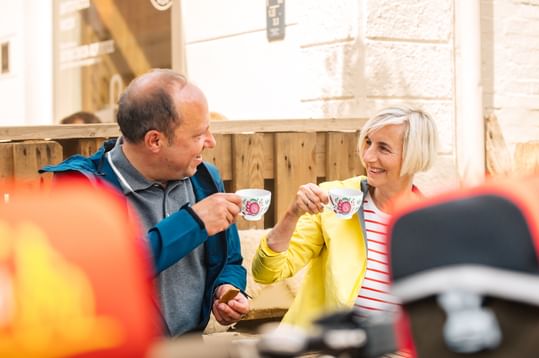
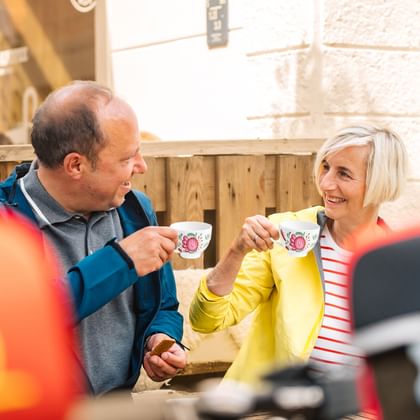
Couple enjoying East Frisian tea ceremony outdoors, sitting at table with traditional tea cups and bicycles visible in foreground.

Typical East Frisia—a vast region with its own traditions

East Frisia wouldn't be East Frisia without its traditional tea ceremony. In our region, tea is as much a part of daily life as the flat countryside, the mudflats, the sea air, and a brisk breeze.
Couple enjoying East Frisian tea ceremony outdoors, sitting at table with traditional tea cups and bicycles visible in foreground.

But there’s much more to discover beyond the famous tea ceremony. Visit the East Frisian Islands, learn more about the Wadden Sea National Park, or stop by the seal sanctuary. You also shouldn’t miss out on culinary delights such as East Frisian beer culture, Smoortaal, or the ever-popular fish sandwich.

"Teetied" (Teatime) in east Frisia

There are different times of day for drinking tea. For many East Frisians, the main tea time is afternoon tea around 3 p.m.

It is said that East Frisians drink 10 times more tea than Germans in other regions. According to global rankings, we are even said to rank first, with approximately 300 liters of tea per person per year. Tea drinking isn’t celebrated every day with Kluntje and a dollop of cream, but this tradition has a long history and is highly cherished. Its origins date back to the early 17th century. To this day, the tea party remains an important part of our East and North Frisian cuisine.

Besünners bi Schietwetter! (Especially when the weather´s bad!) That’s when you just have to “sit tight and have a cup of tea.” The East Frisians are said to be calm and enviably unflappable. That may well be true, because taking regular breaks relaxes both body and mind.

Tea time is essentially a brief break that often takes place several times a day. The East Frisian tea ceremony, however, follows a very specific ritual. Authentic East Frisian tea is a blend of robust Assam tea—very dark and strong. But that’s not all—up to 20 different varieties are combined to create an “authentic East Frisian tea blend.”

What you'll need:

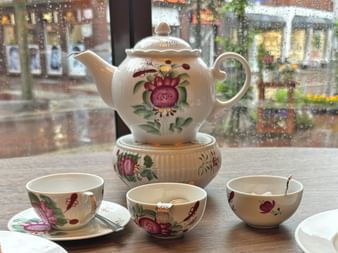
  • Teapot with a tea warmer
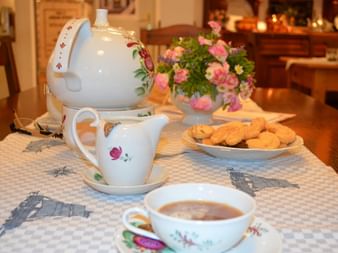
  • A bowl for Kluntje with tongs, and a cream pitcher with a cream spoon
  • Kluntje (rock sugar)
  • Cream
  • Teacups (thin-walled East Frisian teaware is best) with teaspoons.

Preparation

  • You will need about 8–10 g of loose tea (approx. 3 heaping teaspoons) per liter of water. Pour boiling water over the loose tea leaves in a well-warmed teapot.
  • Let the tea steep on the tea warmer for 3–5 minutes. Then strain the finished tea through a tea strainer into a preheated teapot and keep it warm on the tea warmer.
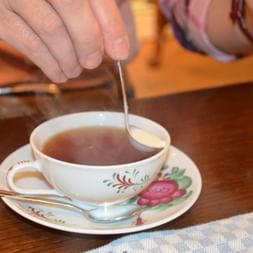
  • Now it’s time to put everything in the cup. First, place a piece of Kluntje (a white rock candy) in the teacup. Then pour the hot tea over it—the Kluntje crackles nicely as the tea is poured. And finally, add the Wöllkchen—a small teaspoon of fresh, high-fat cream. Slowly swirl the cream into the tea in a counterclockwise motion.

Where can I attend a tea ceremony like that?

There are several opportunities to attend a tea ceremony in East Frisia. We have two suggestions that are located along the route of our cycling tours in East Frisia.

Tea museum in Leer

The Bünting Tea Museum in Leer features two floors filled with various tea-related books and nostalgic souvenirs, as well as tea seminars and tea tastings.


Bünting Teemuseum

Brunnenstraße 33

26789 Leer (Ostfriesland)


Prices

Adults: Admission €3.00 per person

Guided tour of the permanent exhibition: €5.00 per person


Events (admission included):

Tea Time: €8.00 per person, approx. 60 minutes

Tea Ceremony: €13.50 per person, approx. 90 minutes

Tea Ceremony with Tea Tasting: €17.50 per person, approx. 120 minutes

Tea Seminar: €15.00 per person, approx. 120 minutes

Hours: Monday through Saturday, 10:00 a.m. to 6:00 p.m.

Events are held for groups of 8 or more people. You can also participate in public events as an individual or in small groups. You can find the event calendar at www.buenting-teemuseum.de www.buenting-teemuseum.de


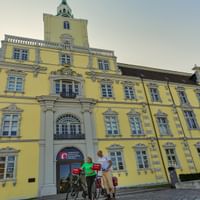
Two cyclists riding through a charming cobblestone street in Leer, East Frisia, lined with colorful historic buildings and traditional shops.

Tea Museum in Norden

The Tea Museum in Norden welcomes you to "The World of East Frisian Tea Culture".

In Norden, you can learn everything there is to know about tea—from the growing regions, through the processing and production of the famous East Frisian blend, to the designs on East Frisian tea sets, and much more.

The museum is open year-round.

April–October: Monday through Sunday, 10:00 a.m. to 5:00 p.m.

East Frisian Tea Ceremony: March–October: Tuesdays, Wednesdays, and Saturdays at 2:00 p.m., and Fridays at 11:00 a.m. Duration: approx. 30 minutes; cost: €3.00 per person plus admission.

Advance registration is requested due to limited capacity. info@teemuseum.de or Tel. 04931 12 100.

East Frisian Tea Museum

Am Markt 36

26506 Norden

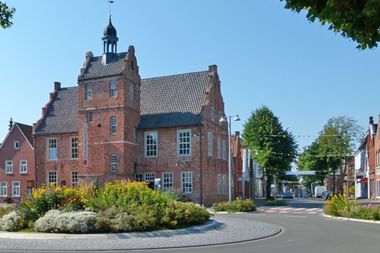
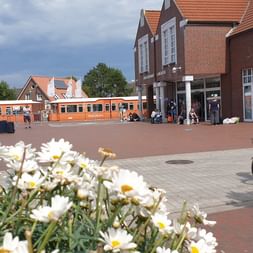
Historic red brick building with bell tower in Norden, East Frisia, housing the tea museum. Circular flower bed in foreground with street.

The East Frisian Islands

These are must-sees when visiting East Frisia.

Our seven islands lie in a row off the coast of Lower Saxony: Borkum, Juist, Norderney, Baltrum, Langeoog, Spiekeroog, and Wangerooge. Endless expanses, long sandy beaches, dune landscapes, our mudflats, and the fresh sea air await you.

All seven islands captivate visitors with their own unique charm. Juist is said to be one of the most beautiful islands, while Spiekeroog is the most idyllic, offering the perfect setting for a relaxing getaway. Of these islands, Baltrum, Langeoog, Juist, Spiekeroog, and Wangerooge are completely car-free. On our “East Frisia Island Hopping” tour, you’ll spend two nights on Langeoog. Beautiful dune landscapes, plenty of beaches, the sea, and excellent bike paths. And all of this without any traffic—just enjoy the peace and quiet and take a break from everyday life.

During our trip, you’ll also visit Borkum and Norderney. Cars are allowed on both islands, though they’re rarely needed. Many people prefer to get around by bike on the islands. A major advantage is that both islands are not affected by the tides, making them easily accessible by ferry for a day trip. You can bring your bikes along to each island and spend the whole day exploring the beautiful surroundings.
 

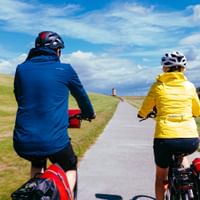
Two cyclists riding on a paved path through golden grass dunes on Langeoog island under a cloudy blue sky.

Seal breeding station

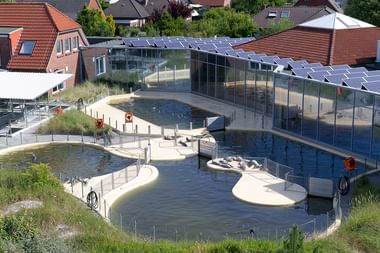
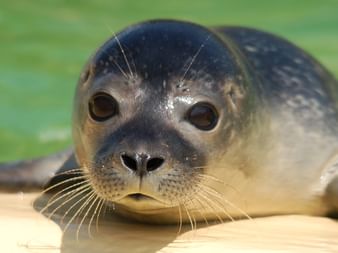
However, if you’d like to take a day off from the island or don’t feel like taking the ferry, then check out Norddeich. That’s where the seal rehabilitation center is located. You can find the opening hours and information on how to book online at www.seehundstation-norddeich.de. The Marine Mammal Rescue Center in the Norddeich district takes in between 80 and 180 orphaned harbor seals and gray seals every year. In addition to raising motherless harbor seals, the center also focuses on research into these animals.


Opening hours:

  • Seal Sanctuary, National Park Center, and Waloseum
  • Open daily from 10:00 AM to 5:00 PM
  • Feeding times: daily at 11:00 a.m. and 3:00 p.m.


Prices:

  • Adult ticket: €12.00 per person
  • Combined ticket for Norddeich and the Waloseum: €20.00 per person
Aerial view of seal sanctuary in Norddeich with curved outdoor pools, glass building, and surrounding residential houses with red tile roofs.

Cuisine in East Frisia

In addition to the well-known East Frisian tea, there are many other regional delicacies

One of the most popular dishes in northern Germany is delicious kale. Traditionally, classic kale is served in winter with potatoes, smoked pork loin, and pinkel sausage. We often combine this with a handcart ride, a walk “around the pudding,” or a game of boßeln. Boßeln is a sport played with a wooden or rubber ball. The goal of Boßeln is to cover a set distance with as few throws as possible. Both are primarily winter leisure activities.

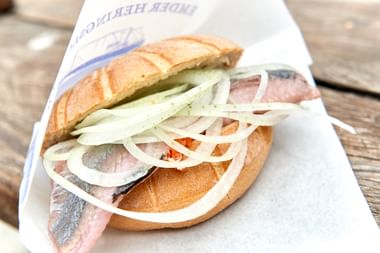
In the summer, we recommend fresh fish such as plaice and North Sea shrimp, as well as Ammerland smoked eel. Or stop by a "milk station" to enjoy special milk-based treats. Well-known dishes like Snirtjebraten, Labskaus, or a fish sandwich right on the beach are also absolutely delicious.


Traditional German Fischbrötchen from Ostfriesland with herring, onions and lettuce on a crusty roll, wrapped in white paper.

Northern German Beer Culture

In addition to tea, our national drink, we also enjoy having a beer from time to time

Friesland

Jever Pilsener Brewery

Do northern Germany and breweries go well together? Yes, very well indeed. There are several coastal breweries that offer tastings or tours. The best-known brewery is probably the one in Jever—home of the Frisian-style bitter beer. Located between the brewery museum and the brewery itself is the brewery taproom “Haus der Getreuen.” A beer tasting is already included on our “East Frisia Beer Tour.”

www.jever.de

Varel TIDE Beer

Since 2008, beer has been brewed at the Vareler Brauerei, where they produce lager, dark beer, pilsner, and wheat beer. Try the TIDE organic beer, which bears the German organic seal. www.vareler-brauhaus.de


East Frisia

Ostfriesen Bräu 

The Ostfriesen Bräu Brewery Museum and brewery are located in Großefehn Bagband. Experience the history of East Frisian beer up close.

www.ostfriesenbraeu.de


Glass of beer on wooden pier railing in Dangast at sunset, with golden light reflecting on calm water and distant figures on beach.
Bike Tour Eastern Frisia

Wadden Sea National Park

Wadden Sea World Heritage Site

The Wadden Sea National Park is divided into three national parks.

  • The Schleswig-Holstein Wadden Sea
  • The Hamburg Wadden Sea
  • The Lower Saxony Wadden Sea


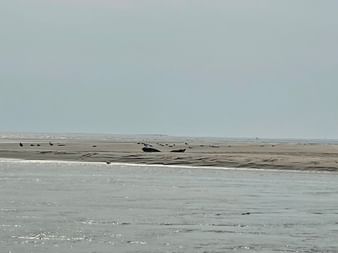
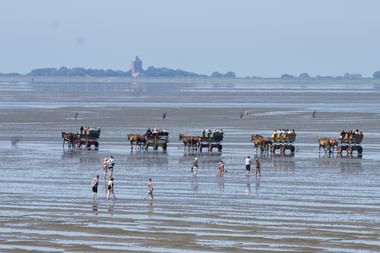
The Wadden Sea is a unique experience because parts of it are still wilderness. The largest contiguous Wadden Sea stretches from the Netherlands through Germany to Denmark. To see and explore the mudflats, the sea has to recede—and it does so at low tide. In the Jadebusen, the water recedes only twice a day, so there are a few hours when you can explore the mudflats. And there’s plenty of life there. There are hundreds of species of algae, worms, crabs, and mussels. And that not only makes us happy but also keeps the birds well-fed.

There is hardly any other place on earth with as much life as there is in the mudflats. That is why preserving the Wadden Sea is so important for many species. This includes whales, seals, and, of course, North Sea tourists. But the Wadden Sea does as it pleases; it is a wilderness and therefore requires a certain amount of care. There are some rules to follow, not just for the preservation and safety of the animals. If you’d like to go on a mudflat hike, always go with a guide, because the tide can come in faster than you think.

In East Frisia, there are numerous mudflat hiking guides who can provide you with interesting information about the flora and fauna.


Bike Tour Nordseeküste
50% discount on rental bikes
Book this trip in March ans save your rental special bike price
find out more
/en/biketours/offer

You will find the already reduced bike prices in our price section. Applies to all new bookings and subject to availability.

find out more
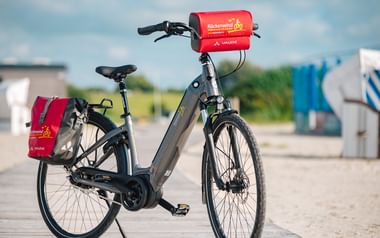
Gray bicycle with red Rückenwind panniers on handlebar and rear rack, parked on wooden boardwalk near beach with changing cabins in background.
You now receive special conditions when you book a trip.